
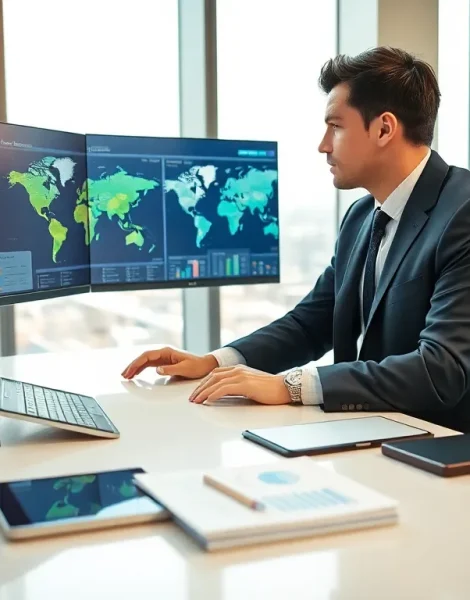
Global affairs tools have become essential for anyone tracking international events, policy shifts, and geopolitical trends. These resources help researchers, journalists, policymakers, and curious citizens make sense of a fast-moving world. From real-time news platforms to interactive data visualizations, global affairs tools turn raw information into actionable insights.
This guide explores the main categories of global affairs tools, explains how to select the right ones, and shows how professionals apply them in research and decision-making. Whether someone is monitoring elections in distant countries or analyzing trade flows, the right tools can transform scattered data into clear understanding.
Table of Contents
ToggleKey Takeaways
- Global affairs tools help researchers, journalists, and policymakers transform overwhelming international data into actionable insights.
- News aggregators and real-time monitoring platforms scan thousands of sources to detect breaking developments before they hit mainstream coverage.
- Data visualization and mapping tools reveal trends, patterns, and correlations that raw numbers alone cannot communicate.
- Choose global affairs tools based on your purpose, budget, technical skill level, and the specific regions or topics you need to track.
- Combining multiple tools—such as an aggregator for breaking news and a visualization platform for context—delivers the most comprehensive results.
- These tools support policy research, corporate risk assessment, academic studies, and journalism by closing the gap between raw data and informed decisions.
What Are Global Affairs Tools?
Global affairs tools are software platforms, databases, and analytical systems designed to track, interpret, and present international news and data. They range from simple news aggregators to sophisticated mapping systems that visualize conflict zones, migration patterns, or economic indicators.
These tools serve multiple audiences. Diplomats use them to prepare briefings. Academics rely on them for research. Businesses monitor global affairs tools to assess risks in foreign markets. Journalists turn to them for story leads and fact-checking.
The core function of any global affairs tool is to reduce information overload. The world produces enormous amounts of data every day, government reports, news articles, satellite imagery, social media posts. Good global affairs tools filter this flood into something manageable and meaningful.
Some tools focus on specific regions or topics. Others offer broad coverage across all continents. The best global affairs tools combine speed, accuracy, and user-friendly design. They let users set alerts, customize dashboards, and export data for further analysis.
Key Categories of Global Affairs Tools
Global affairs tools fall into several distinct categories. Each serves different needs and workflows. Understanding these categories helps users find the right fit for their goals.
News Aggregators and Real-Time Monitoring Platforms
News aggregators pull content from thousands of sources worldwide. Platforms like Google News, Feedly, and Factiva collect articles from major outlets and local publications alike. Users can filter by region, topic, or language.
Real-time monitoring platforms take this a step further. Tools such as Meltwater and Dataminr scan news feeds, social media, and official channels for breaking developments. They use algorithms to detect emerging stories before they hit mainstream coverage. Security analysts and crisis managers often depend on these global affairs tools to stay ahead of events.
The advantage of aggregators is breadth. A single dashboard can display headlines from dozens of countries. The challenge is filtering noise. Effective users learn to set precise keywords and source preferences.
Data Visualization and Mapping Tools
Data visualization tools transform statistics into charts, graphs, and interactive maps. Global affairs tools in this category include platforms like Our World in Data, the World Bank’s DataBank, and the Armed Conflict Location & Event Data Project (ACLED).
Mapping tools add a geographic layer. Users can see where events occur, track patterns over time, and compare regions side by side. Crisis mappers use these tools to monitor disasters, protests, or military movements.
Visualization matters because raw numbers rarely tell the full story. A chart showing refugee flows or GDP growth rates communicates faster than a table of figures. These global affairs tools help researchers spot trends, outliers, and correlations that might otherwise go unnoticed.
How to Choose the Right Tools for Your Needs
Selecting global affairs tools depends on several factors: purpose, budget, technical skill, and the regions or topics of interest.
Start with purpose. A policy analyst tracking arms treaties needs different resources than a journalist covering humanitarian crises. Some global affairs tools specialize in economic data: others focus on political risk or security issues. Match the tool to the task.
Budget matters too. Many global affairs tools offer free tiers with limited features. Premium subscriptions unlock deeper archives, faster alerts, and API access. Organizations with serious research needs often invest in paid platforms, while students and hobbyists can accomplish a lot with free options.
Technical skill shapes the choice as well. Some tools require coding knowledge to extract full value. Others feature point-and-click interfaces accessible to beginners. Consider the learning curve before committing.
Finally, check source coverage. Not all global affairs tools cover every region equally. A platform strong on European politics may have gaps in Southeast Asia. Review the source list and test the tool with specific queries before relying on it for critical work.
Combining multiple tools often yields the best results. An aggregator can catch breaking news, while a visualization platform adds depth and context.
Practical Applications in Research and Decision-Making
Global affairs tools support a wide range of professional and academic activities. Here are a few examples of how practitioners put them to use.
Policy Research: Think tanks and government agencies use global affairs tools to gather evidence for reports. A researcher studying sanctions might pull trade data from one platform, news coverage from another, and satellite imagery from a third. Combining sources builds a more complete picture.
Corporate Risk Assessment: Multinational companies monitor political stability in countries where they operate. Global affairs tools help risk managers identify protests, regulatory changes, or leadership transitions that could affect operations. Early warnings allow businesses to adjust supply chains or evacuate staff if necessary.
Academic Studies: Scholars use global affairs tools to build datasets for quantitative analysis. A political scientist studying election violence, for instance, might extract incident data from ACLED and merge it with economic indicators from the World Bank. These tools accelerate research that once required months of manual data collection.
Journalism: Reporters use global affairs tools to verify claims, track sources, and identify patterns. A correspondent covering migration can map routes, compare official statistics, and monitor social media reports, all from a single workstation.
In each case, global affairs tools reduce the gap between raw data and informed action. They don’t replace expertise, but they amplify it.


